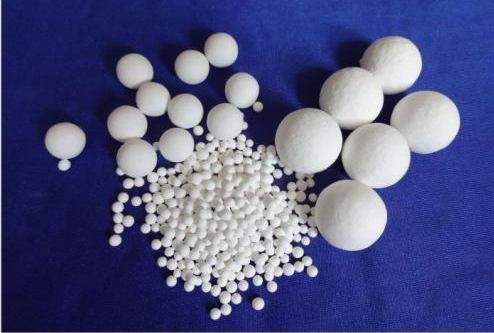
What are the concepts and basic information of molecular sieve
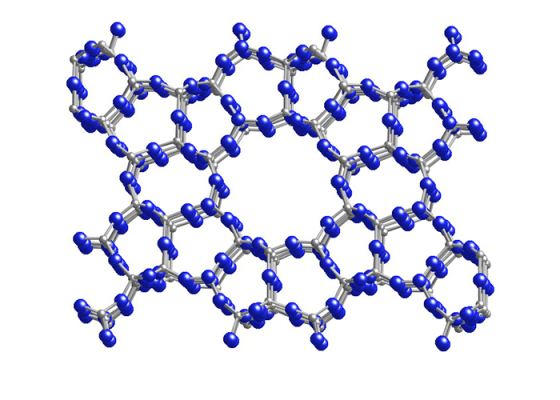
Molecular sieves are crystalline silicates or aluminosilicates formed by SiO₄ or AlO₄ tetrahedra linked through oxygen bridges. They possess a system of channels and cavities of molecular dimensions (typically 0.3–2.0 nm), which gives them the ability to sieve molecules.
However, as research into the synthesis and application of molecular sieves has deepened, aluminophosphate molecular sieves have been discovered. The framework elements (silicon, aluminum, or phosphorus) can also be substituted by elements such as B, Ga, Fe, Cr, Ge, Ti, V, Mn, Co, Zn, Be, and Cu, and their channels and cavities can reach sizes above 2 nm. Therefore, according to framework composition, molecular sieves can be classified into aluminosilicate, aluminophosphate, and heteroatom-framework molecular sieves. According to pore size, molecular sieves with pore sizes below 2 nm, between 2 and 50 nm, and above 50 nm are called microporous, mesoporous, and macroporous molecular sieves, respectively.
Because of their relatively large pore sizes, mesoporous materials are good supports for reactions involving larger molecules. However, their pore walls are amorphous, so their hydrothermal and thermal stabilities cannot yet meet the harsh conditions required for petrochemical applications.
Because molecular sieves contain metal ions with relatively low valence and large ionic radii as well as water of hydration, water molecules are continuously lost upon heating while the crystalline framework remains unchanged. This forms many cavities of uniform size, which are interconnected by numerous micropores of identical diameter. These tiny cavities have a uniform diameter and can adsorb molecules smaller than the pore diameter into their interiors while excluding larger molecules. Thus, they can separate molecules of different shapes and sizes, polarities, boiling points, and degrees of saturation. This is the “molecular sieving” effect, hence the name “molecular sieves.”
At present, molecular sieves are widely used in industries such as metallurgy, the chemical industry, electronics, petrochemicals, and natural gas.